


This site is protected by reCAPTCHA and the Google Privacy Policy and Terms of Service apply.
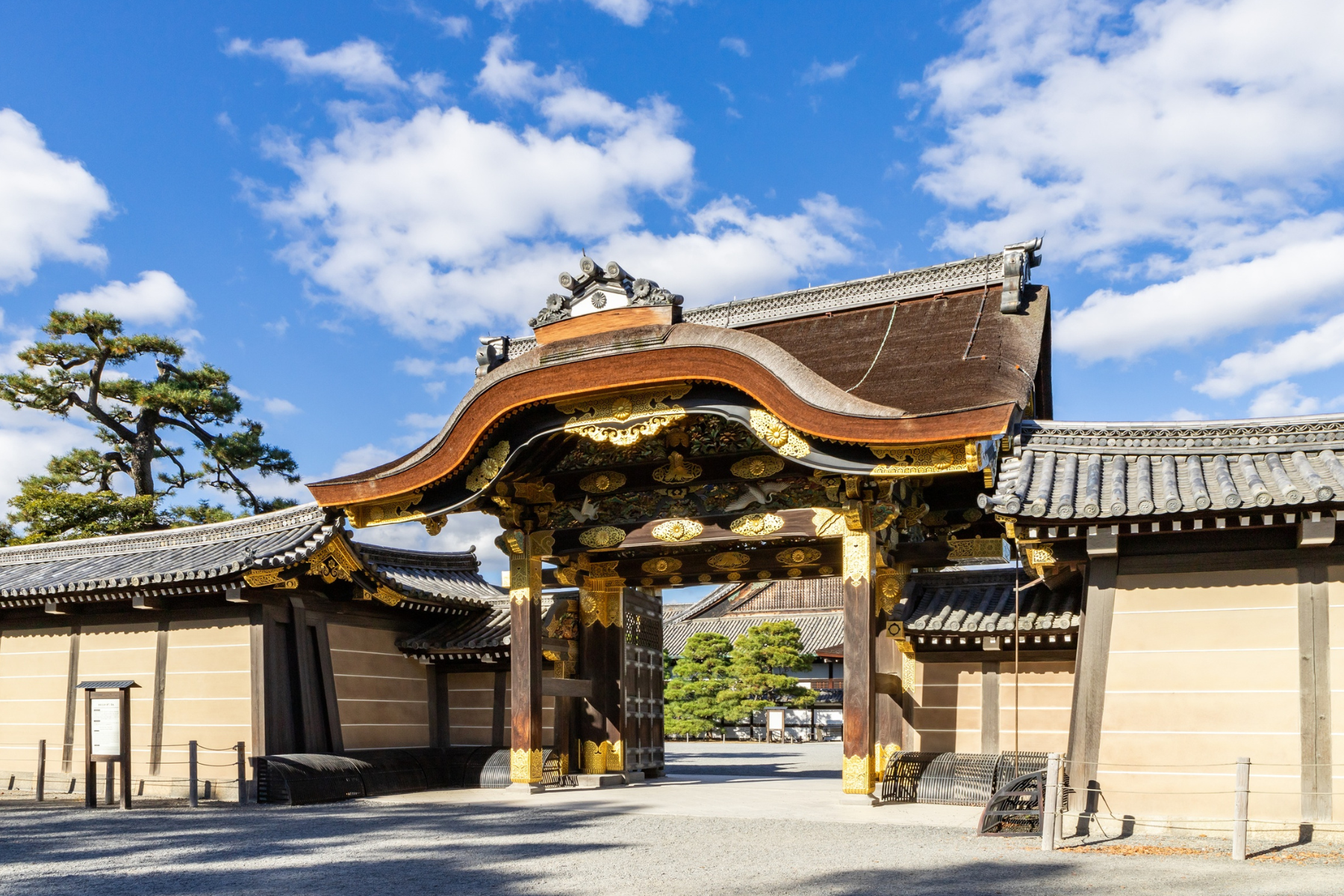
Japan: From the Samurai to the Atomic Age
Length of Tour:
10 days | 9 nights
Japan: Osaka, Kyoto, Nagasaki, Tokyo
One country, one lifetime, and the most complete transformation any nation has ever made: from the age of the samurai to the atomic age, followed on the ground in Kyoto, Nagasaki and Tokyo.
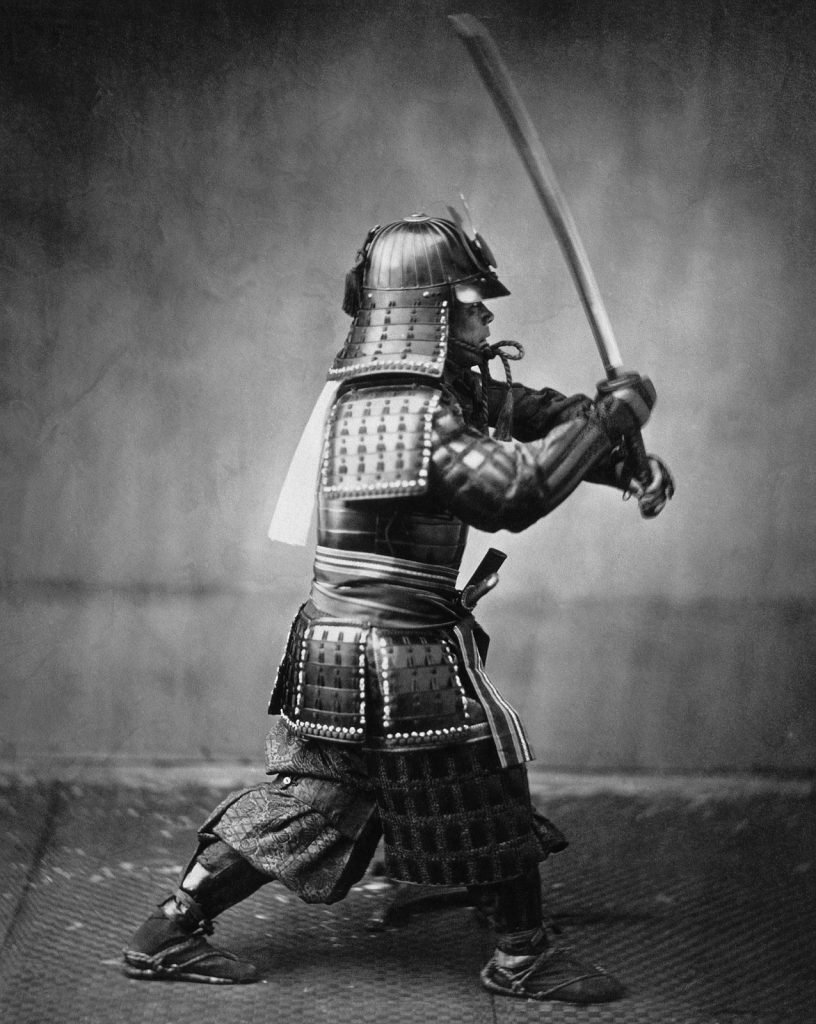
This Japan samurai tour follows one lifetime. A boy born in 1837 grew up in a closed country ruled by a military dictator and defended by a hereditary warrior caste that had held power for two and a half centuries. If he lived a normal span, he died in a country with battleships, railways and an empire, and his grandchildren watched a single aircraft destroy a city.
Ten days in the four cities where it happened. In Kyoto you stand in the hall where the last shogun surrendered his authority and on the field where the shooting started. In Nagasaki, the one port Japan never fully closed, you meet the Scot who armed the rebellion, walk the island where the Dutch were quarantined for two hundred years, and stand at the hypocenter. In Tokyo you finish at the palace of the restored emperor and at the shrine where Japan still argues with itself about what all of it meant.
Your historian is Dan King, who designed this route. He spent ten years living and working in Japan, speaks the language, has written five books on the Pacific War, and was historical consultant and troop trainer on The Last Samurai. This is a campaign study of the Meiji Restoration and its consequences, run the way we run Normandy: on the ground, in sequence, with the argument still open.
Highlights
Nijō Castle, Kyoto
The Kyoto residence of the Tokugawa shoguns, and the hall where the last of them, Tokugawa Yoshinobu, gave up two and a half centuries of military rule.
The Toba-Fushimi Battlefield
Walk the ground south of Kyoto where imperial forces and shogunate troops opened the Boshin War in January 1868, in the plum gardens of Jōnangū Shrine.
Samurai Armor You Can Wear
At the Samurai Ninja Museum you view authentic armor and then put on a full replica suit yourself, with optional tea ceremony and shuriken throwing.
Sakamoto Ryōma
The Ryōzen Museum of History holds the revolver Ryōma carried. The Teradaya Inn is where he used it to fight his way past ten assassins.
Kyoto’s Temples and Torii Gates
Kiyomizu-dera and its three sacred waterfalls, the bamboo at Kōdai-ji, the great torii of Heian Jingū, and the tunnel of vermilion gates at Fushimi Inari.
Glover Garden, Nagasaki
The hilltop house of Thomas Blake Glover, the Scot who brought Japan its first steam locomotive, founded the shipyard that became Mitsubishi, started what became Kirin Beer, and ran guns to the men who overthrew the shogun.
Dejima
The fan-shaped artificial island where Dutch traders were confined for over two centuries, now rebuilt as a living history museum. For most of the Edo period this was Japan’s only window on the West.
Ōura Cathedral and the 26 Martyrs
Japan’s oldest surviving church, a National Treasure and part of the UNESCO Hidden Christian Sites, and the hill above Nagasaki Station where twenty-six men and boys were crucified for their faith.
Nagasaki Atomic Bomb Museum and Peace Park
The second city, and the last. You will also enter the Tateyama air raid shelter, the concrete command post from which the prefectural government watched the city disappear.
Tokyo: The Palace and the Shrine
The Imperial Palace and gardens the restored emperor moved into, and Yasukuni Shrine with the Yūshūkan war museum, where Japan’s argument about its own past is still very much live.
Itinerary
You make your own way from the Osaka Kansai International (KIX) airport to the tour hotel, where the group gathers for a briefing and welcome dinner. This is where you meet your historian, your tour manager, and the people you will spend the next ten days with.
Over dinner, Dan King sets the frame. In 1853 Japan had been closed for two hundred and fifty years, governed by a shogun in Edo while an emperor lived in ceremonial seclusion in Kyoto, its social order fixed by law with a hereditary warrior class at the top. Within fifteen years the shogunate was gone, the emperor was restored, and the samurai were legislated out of existence by the government their own class had installed. Understanding how a society does that to itself in a single generation is what the rest of the tour is for.
You travel to Kyoto on the Haruka Express, about an hour and a quarter, and check in, then begin where the old order ended. Nijō-jo Castle was built as the Kyoto seat of the Tokugawa shoguns, a fortified palace of moats, painted screens and “nightingale” floors engineered to squeak underfoot and betray an assassin. It was in the great hall of the Ninomaru Palace, in the autumn of 1867, that Tokugawa Yoshinobu, the fifteenth and last shogun, born in 1837 and alive until 1913, assembled the lords of the realm and returned governing authority to the Emperor. The building where he did it is still standing, and you will walk through it.
The afternoon moves from the political to the material. The Museum of Kyoto occupies the former Bank of Japan Kyoto branch, a Meiji-era brick building from 1906 that is itself an artifact of the Westernization program, and covers the city’s history from the imperial court to the modern era. At the Samurai Ninja Museum you view authentic period armor and then wear a full replica suit, with optional tea ceremony and shuriken throwing indoors. You close the day at Jōnangū Shrine, whose gardens are laid out in the Heian court style that the Restoration took as its model for what it was restoring, and which stands on the Toba-Fushimi battlefield. Here, in January 1868, an outnumbered imperial army carrying modern rifles broke a larger shogunate force and turned a political crisis into the Boshin War. This is the ground the fall of the samurai actually happened on.
The tour is called a restoration for a reason, and today is about what was being restored. Heian Jingū was built in 1895 to mark eleven centuries since Kyoto was founded as the imperial capital, and it enshrines the first emperor to rule from the city and Emperor Kōmei, the last emperor of the old order, who died in 1867 on the eve of everything. Its torii is one of the largest in Japan and its garden is among the finest surviving Meiji-era landscapes.
At the Kyoto Handicraft Center you have a 45-minute meet-and-greet with a maiko, an apprentice geiko, including a photo session, a rare chance to ask questions of someone inside a tradition that predates the Restoration and survived it. You continue to Kōdai-ji Temple, founded in 1606 by the widow of Toyotomi Hideyoshi, with its bamboo grove and its hillside gardens above the Higashiyama district. If time permits, the day ends at Fushimi Inari Shrine, where thousands of vermilion torii gates, each one donated by a business or family, climb the mountain in an unbroken tunnel.
The Restoration was made by young men from the outer domains, most of them low-ranking samurai, many of them killed before they saw it finished. The Ryōzen Museum of History is devoted to them: it specializes in the Meiji Restoration and the figures who drove it, and its collection includes the revolver carried by Sakamoto Ryōma, the Tosa samurai who brokered the alliance between the rival domains of Satsuma and Chōshū that made the overthrow of the shogunate possible, and who was assassinated in Kyoto in 1867 at the age of thirty-one.
From the museum you go to the pistol’s most famous moment. At the Teradaya Inn in Fushimi, in 1866, shogunate agents surrounded Ryōma in his lodgings and he fought his way out with a Smith & Wesson revolver, wounded in the hands, warned in time by a woman who ran up the stairs from the bath. The building is preserved as a museum. The day closes at Kiyomizu-dera, the great temple on the eastern hills, where the Otowa waterfall splits into three streams for health, love and success, and where the view over Kyoto is the one every visitor to this city has carried away for four hundred years.
You travel by train from Kyoto Station to Itami Airport, fly to Nagasaki, and transfer about forty-five minutes by coach into the city. Nagasaki is why this tour is possible: the one harbor the Tokugawa never closed completely, and therefore the seam through which everything foreign entered Japan: guns, ships, medicine, Christianity, coal technology and revolution.
The afternoon is at Glover Garden, the hilltop estate of Thomas Blake Glover, a Scottish merchant who arrived in 1859 at twenty-one and reshaped the country. He introduced Japan’s first steam locomotive, brought in modern coal mining at Takashima, founded the Kosuge slip dock and shipyard that grew into Mitsubishi Heavy Industries, and started the brewery that became Kirin. He also ran rifles and warships to the anti-shogunate domains of Satsuma and Chōshū in defiance of British treaty obligations and Japanese law, arming the men who would win the Boshin War and form the Meiji government. His house, Japan’s oldest surviving Western-style building, looks out over Nagasaki Bay. Next door stands Ōura Cathedral, built in 1864, the oldest surviving church in Japan, a designated National Treasure and part of the UNESCO World Heritage listing for Hidden Christian Sites. This is the place where, months after it opened, a group of villagers quietly identified themselves to a French priest as the descendants of Catholics who had kept the faith in secret for seven generations.
At two minutes past eleven on the morning of August 9, 1945, a plutonium implosion bomb detonated roughly five hundred meters above the Urakami valley, over the largest Catholic community in Japan and a city that had been the country’s window on the West for three hundred years. You will spend the morning at the Nagasaki Atomic Bomb Museum, Nagasaki Peace Park and the hypocenter. Your historian will speak here. This is a difficult stop and it is not optional to understanding the rest of the tour.
The afternoon returns to the century that led here. The Nagasaki Museum of History and Culture is a world-class collection of samurai culture and armor, of Nagasaki’s role as the point of contact with the outside world, and of the Restoration itself, including displays of the Western and Japanese weapons actually used in the Boshin War. Seeing those rifles a few hours after standing at the hypocenter is the entire argument of this tour compressed into a single day: eighty years separate them.
You begin at the Tateyama Air Raid Shelter Complex, a set of concrete tunnels cut into the hillside that served as the Nagasaki prefectural defense headquarters. Officials were inside it when the bomb went off, and their accounts of that moment are displayed where they were written. Above it lies Tateyama Park, on high ground with a long view back down over the harbour and the Urakami valley, which gives you the geography of the following morning’s stops before you make them.
The rest of the day is the long story of Japanese isolation and the people it was enforced against. Dejima is the fan-shaped artificial island in Nagasaki harbor where Dutch traders were confined from 1641 until the country reopened, restored now as a living history museum of warehouses, offices and residences; for two hundred years, this was Japan’s only authorized channel to Europe. At Kazagashira Park you find the statue of Sakamoto Ryōma looking out over the harbor, and the restored headquarters of Kameyama Shachu, the trading company Ryōma founded here, in effect Japan’s first modern corporation, to move Glover’s rifles to the domains that would use them against the shogun. You finish on Nishizaka Hill, a short walk from Nagasaki Station, at the Monument and Museum of the 26 Martyrs: six foreign missionaries and twenty Japanese Catholics, the youngest twelve years old, arrested in Kyoto and Osaka, marched some six hundred miles in winter, and crucified here in February 1597. The monument has been visited by two popes, John Paul II in 1981 and Francis in 2019.
You transfer to Nagasaki airport and fly to Haneda, an hour and forty minutes, arriving in the capital the Restoration created. When the emperor left Kyoto in 1868 and moved into the shogun’s castle in Edo, the city was renamed the Eastern Capital and the whole center of gravity of the country shifted with him.
You will visit the Imperial Palace and East Gardens, built on the foundations of Edo Castle, the Tokugawa seat of power for two and a half centuries, and view the Nijūbashi, the double bridge that is the palace’s public face. In the plaza outside stands the equestrian statue of Kusunoki Masashige, the fourteenth-century commander who fought and died for an emperor against overwhelming odds. He was a minor medieval figure until the Meiji state made him the model of loyalty for a modern nation, and by the 1940s every Japanese soldier knew his name. Standing in front of it, you can see exactly how a government builds a myth it will later need.
Yasukuni Shrine was founded in 1869, on the emperor’s order, to enshrine the spirits of those who died fighting for the imperial cause in the Boshin War. Over the following century its lists grew to include the dead of every war Japan fought, and the question of who belongs on them has made it one of the most contested sites in East Asia. On the grounds stands the Yūshūkan, Japan’s oldest military museum, which presents the country’s wars in terms many foreign visitors find difficult and some find indefensible. You will tour it with a historian who reads Japanese, who has spent decades interviewing Japanese veterans, and who will tell you plainly what the exhibits say, what they leave out, and why the argument matters. Lunch is at the museum.
The afternoon is free for packing, for Tokyo, or for whatever you have been meaning to see. The group gathers in the evening for a farewell dinner to close out the journey: ten days, four cities, and the span from a warrior class that had ruled since 1603 to the morning the war ended.
One morning transfer from the hotel to Narita International Airport (NRT) for flights home. Allow roughly ninety minutes for the drive, plus international check-in.
Tour Includes
- Professional Pacific War historian traveling with the group throughout, lecturing on site and answering questions
- Tour manager handling guest needs and on-the-ground logistics
- Educational road book of maps and historical background
- Hotel accommodations with private bath or shower
- Hotel taxes and service charges
- All internal transport within Japan, including the Haruka Express to Kyoto, internal flights to Nagasaki and Tokyo, and private coach touring
- Breakfasts daily, some lunches, some dinners, a welcome dinner and a farewell dinner
- All entrance fees to museums, temples, shrines and sites
- Maiko meet-and-greet with photo session, and samurai armor experience
Flights
- Flights to and from the tour are not included in the cost.
Flights
- Flights to and from the tour are not included in the cost.
Activity Level
As with all of our tours, we prefer to spend our time on the ground where the history happened. Expect a fair amount of walking, much of it on uneven surfaces: temple grounds, gravel approaches, cobbled slopes and hillside gardens. Several sites are reached by stairs with no alternative. Kiyomizu-dera, Kōdai-ji, the sloped street up to Ōura Cathedral and Glover Garden, and Nishizaka Hill all involve climbing. The gate path at Fushimi Inari is a mountain trail; you go as far up it as you wish.
You will remove your shoes at several sites, including the interior of Nijō Castle, so slip-on footwear is worth packing. The itinerary includes two internal flights and one express train, and you will need to manage your own luggage through stations and airports. October is one of the most comfortable months in Japan, warm to mild and far drier than summer, though Kyushu can still catch the tail of the typhoon season in the first half of the month.
If you use a wheelchair, please read our Wheelchair Policy.
Recommended Reading
- Dan King’s books on the Pacific War:
- The Last Zero Fighter (2012), Japanese naval pilots
- A Tomb Called Iwo Jima (2014), Japanese survivors of Iwo Jima
- Blossoms from the Sky (2021), kamikaze pilots who volunteered for the Ohka rocket bomb
- The Iron Graves of Saipan (2026), the Japanese 9th Tank Regiment from Manchuria to the Marianas, his most recent
- The Making of Modern Japan by Marius B. Jansen
- Sakamoto Ryōma and the Meiji Restoration by Marius B. Jansen
- Nagasaki: Life After Nuclear War by Susan Southard
- Embracing Defeat: Japan in the Wake of World War II by John W. Dower
War in the Pacific: Operation Forager
Travel to the islands where the battles raged on the land, air and sea on our WWII in the Pacific: Northern Marianas Tour: Saipan, Tinian, Guam, Iwo Jima. Read More >
Battle of Okinawa: The End of Japan’s War
The Battle of Okinawa: The End of Japan's War Tour covers the final battles of WWII, providing you with an understanding of how this historic battle affected the soldiers, sailors, and Marines who fought it as well as the civilians. Read More >