


This site is protected by reCAPTCHA and the Google Privacy Policy and Terms of Service apply.
Patton’s War in the Mediterranean: North Africa to Sicily
North Africa, Sicily
In a dust-blown headquarters tent in Tunisia, a 57-year-old American major general named George S. Patton, Jr. took command of a defeated army. It was the morning of March 6, 1943. The U.S. II Corps had been routed by Erwin Rommel at the Kasserine Pass two weeks earlier, 6,000 American casualties and a 50-mile retreat in 8 days. Eisenhower had relieved its commander.
Patton had been ordered to fix it. He had twelve days. He gave his first order before he had finished unloading his Jeep: every man clean-shaven, every helmet on, every uniform regulation, every officer wearing his necktie in 100-degree heat. Within two weeks, II Corps was on offense. Within four months, Patton was leading a field army across Sicily.
Before North Africa, Patton was a 57-year-old professional soldier with a reputation in the Army for hard training and a flair for spectacle. After Sicily, he was the most famous American field commander in the war, the man whose Third Army would race across France in the summer of 1944, and whose name on the front pages would never leave them again. He was also the man who slapped two GIs suffering from combat fatigue in two different field hospitals in Sicily in August 1943, an episode Eisenhower nearly used to relieve him for good.
Both Pattons appear on this tour. The historian leading it, Kevin M. Hymel, has written three books on Patton’s command, including the two-volume Patton’s War, making him one of the most published Patton historians of his generation. The tour follows Patton from his Atlantic landing at Casablanca to his arrival in Messina nine months later, across Morocco, Tunisia, and Sicily.
Along the way, you will:
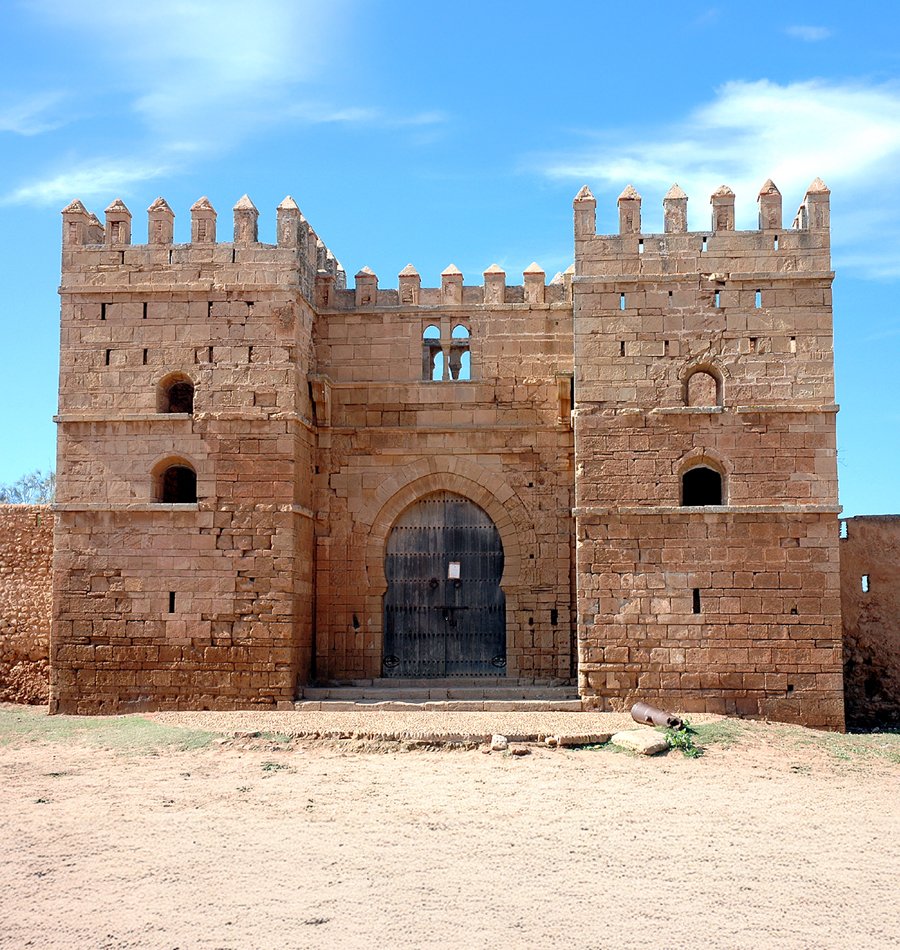
- Walk the beaches at Mehdia and Fedala on the Atlantic coast of Morocco, where on November 8, 1942, Patton’s Western Task Force came ashore in the U.S. Army’s first ground combat operation in the European-Mediterranean theater. They fought against Vichy French resistance for three days, including a sharp fight for the Kasbah of Mehdia on the Sebou River.
- Visit Patton’s wartime headquarters in Casablanca and the Anfa Hotel, where in January 1943, Roosevelt and Churchill met for the Casablanca Conference and announced the policy of unconditional surrender. Then stop at Rick’s Café Casablanca, a re-creation of the bar from the 1942 film, opened in 2004 in the city the movie made famous.
- Drive into the Tunisian Atlas Mountains and walk the high ground at Faïd Pass and Kasserine Pass, where, between February 14 and 22, 1943, Erwin Rommel’s Afrika Korps and the German 10th Panzer Division routed the U.S. II Corps. The Americans took 6,000 casualties and were pushed back fifty miles. It was the worst U.S. defeat of the war in the Mediterranean theater.
- Stand at the II Corps headquarters in Tunisia, where on March 6, 1943, Patton replaced Maj. Gen. Lloyd Fredendall gave his famous spit-and-polish order — every man clean-shaven, every helmet on, every officer wearing his necktie in 100-degree heat. The reforms went deeper than appearances. Within two weeks, the corps was on offense.
- Walk the desert ridge at El Guettar, where on March 23, 1943, the U.S. 1st Infantry Division (the same “Big Red One” that would land at Omaha Beach 14 months later) broke the German 10th Panzer Division’s attack. It was the first significant U.S. victory over German forces in the war.
- Pay your respects at the North Africa American Cemetery on the outskirts of Carthage, where 2,841 American war dead from the Tunisian campaign are buried, and 3,724 names of the missing are inscribed on the Wall of the Missing. Most of the men buried here were killed in fewer than four months of combat in the spring of 1943.
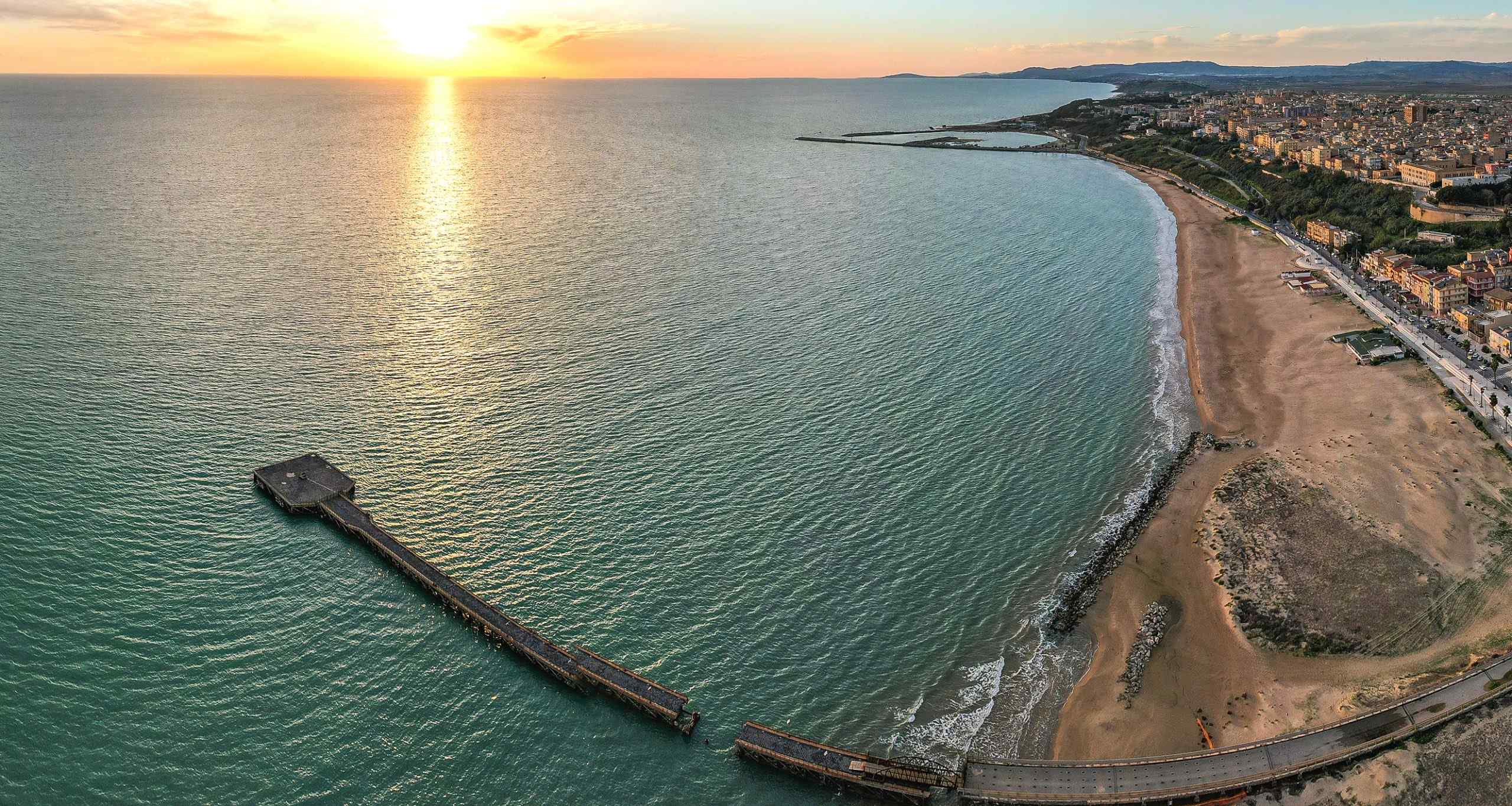
- Walk the Sicilian beach at Gela, where on July 10, 1943, Patton, now commanding the U.S. 7th Army, came ashore at the head of the largest amphibious operation the war had yet seen. Within 48 hours, the 1st Infantry Division had broken a Hermann Göring Division counterattack at the “Y” crossroads inland, and Patton’s 7th Army was inland for good.
- Follow Patton’s drive across western Sicily from Gela to Palermo, where on July 22, 1943, the U.S. 7th Army covered 100 miles of mountain road in five days and accepted the surrender of Sicily’s capital. Stand at Patton’s headquarters in the Royal Palace, where he set up his command for the next leg of the campaign.
- Walk the Sicilian mountain town of Troina, where between July 31 and August 6, 1943, the U.S. 1st Infantry Division fought one of the hardest American battles of the campaign, a week of close-quarters combat against the German 15th Panzergrenadier Division entrenched in the high stone houses. Robert Capa’s photographs from inside the fight at Troina are some of the most reproduced images of the war.
- Stop at the locations of the two field hospitals in Sicily where, on August 3 and August 10, 1943, Patton struck and verbally abused two American soldiers suffering from combat fatigue. The story broke in November, and Eisenhower nearly relieved Patton for good. Patton spent nearly a year under a cloud and out of major combat command until Bradley brought him into Normandy in August 1944.
- End at Messina, the strategic port at the northeastern tip of Sicily, where on August 17, 1943, Patton entered the city ahead of Montgomery’s 8th Army by two hours. The Allies had won Sicily in 38 days. Patton had taken an army across mountain country at speed, a foreshadowing of what the 3rd Army would do across France a year later.
This is the tour about how Patton became Patton. Before North Africa, he was a 57-year-old professional soldier with a reputation for hard training and spectacle. He arrived in Morocco as a corps commander who had not seen combat in 24 years. He left Sicily commanding an army that had crossed the island in 38 days. Along the way, he was beaten at Kasserine, taught a corps how to fight at El Guettar, won a campaign at Messina, and slapped two soldiers in a hospital tent. All of it happened in nine months. All of it is on this tour.
By the end, you will have followed the U.S. Army from its first day of WWII combat in the European-Mediterranean theater, a Moroccan beach in November 1942, to its first major campaign victory at Messina, August 1943.
You will have stood on the desert ridge where the army learned how to beat a German tank division. You will have seen the cemetery at Carthage where the cost is buried. And you will have a very specific picture of George Patton, an actual man, not a movie character, in your head. The discipline he imposed, the speed he demanded, the price his soldiers paid, and the price he himself nearly paid for losing his temper twice in August 1943.
Highlights
Morocco Landing Beaches
Walk the historic shores where Patton’s Western Task Force first landed during Operation Torch, marking the beginning of the Allied campaign in North Africa and Patton’s rise as a key military leader
Rick’s Café in Casablanca
See the iconic recreation of the café from the famous WWII-era film Casablanca
Spanish Castle on the Sebou River
Explore this historic stronghold, a key location in the Allied push through Morocco that provides insight into the region’s role in Patton’s early victories
Gela Beach in Southern Sicily
See where Patton’s forces stormed ashore during Operation Husky, paving the way for the liberation of Sicily and showcasing his bold leadership in amphibious warfare
Patton’s Headquarters in Palermo
Discover where Patton established his command post during the Sicilian Campaign, orchestrating decisive moves that solidified his reputation as an audacious and effective general
Museo Messina nel Novecento
Delve into the stories of the Allied advance through Sicily at this museum, located in the city where Patton’s forces achieved victory in the race to capture the strategic port of Messina
Tour Includes
- Patton expert Kevin M. Hymel will travel with you throughout the tour, lecturing and answering questions
- Dedicated tour manager, who takes care of all logistics
- Educational road book of maps and historical information
- 3 or 4-star hotel accommodations
- Rooms with private bath or shower
- Hotel taxes and service charges
- Touring by private first class, air-conditioned motor coach
- All entrance fees to museums and attractions
Flights
Flights are not included in the cost of the tour.
Flights
Flights are not included in the cost of the tour.
Activity Level
As with all of our tours, we prefer to spend our time on the battlefields. There will be some museum stops, but please be prepared to walk on sandy beaches and cobblestone streets. There is a fair amount of walking.
If you use a wheelchair, please read our Wheelchair policy.
Let us know you’re interested!
Recommended Reading
by Kevin M. Hymel
An Army at Dawn: The War in North Africa, 1942-1943, Volume One by Rick Atkinson
Sicily ’43: The First Assault on Fortress Europe by James Holland
Customize this Tour
If you would like to customize this itinerary for your alumni travel association, educational organization, high school, family or other private group, please see our private tours page.
In Patton’s Footsteps
On this fascinating WWII Tour, we visit the sites and battlefields significant to Patton’s Third Army, including Normandy, Brittany, Mont-St-Michel, the battlegrounds of Falaise Pocket, the German border, and the Battle of the Bulge, to understand how this maverick general helped win the war in Europe. Read More >
The Liberation of France: Riviera to the Rhine
To mark one of the most crucial but often overlooked campaigns of WWII, we are pleased to offer The Liberation of France: Riviera to the Rhine Tour. You will follow the epic Allied advance from the initial Allied landings in the south of France through Aix-en-Provence and the Vosges mountains before traveling on to Alsace and ultimately the Rhine River. Read More >
Allied War in Europe: The Final Days
The Allied War in Europe: The Final Days Tour covers the fall of the Third Reich and the end of World War II in Europe. Read More >