


This site is protected by reCAPTCHA and the Google Privacy Policy and Terms of Service apply.

UM Flint – Civil War Tour: This Hallowed Ground
Length of Tour:
9 days | 8 nights
Virginia, West Virginia, Maryland, Pennsylvania
The Civil War: This Hallowed Ground Tour features a panorama of the major events that began and ended the Civil War, the defining event in American history. You will start with First Bull Run/Manassas and continue through Gettysburg to the finality of Confederate surrender at Appomattox. Along the way, you will learn why and how they fought, study the military campaigns and rival strategies that made the conflict so deadly, and view the battlefields where 750,000 Americans lost their lives, including volunteers, immigrants, ex-slaves and draftees.
What motivated these men and the families who sent them off to fight? How did Confederate armies in the East win battles so often in the first two years of the war, even with fewer resources? How did the tide turn in favor of Federal forces after Gettysburg? And why did the Confederates finally surrender? As you trace the steps of the two armies, you will find inspiration in the skills, courage, and endurance displayed by the entire generation that lived through the Civil War and enhance your understanding of the bloody conflict that would forever change the direction of American history.

Highlights
Bull Run/Manassas, Gettysburg to Appomattox
Study the causes behind the conflict and visit the battlefields that included victories for both sides and led to the Confederate surrender
Harpers Ferry
See where John Brown’s Raid helped trigger the conflict in 1859 at the confluence of the Shenandoah and Potomac rivers
Sharpsburg/Antietam
Visit the site of the bloodiest day of war in American history, with 23,000 casualties
Gettysburg
Study the three days in July 1863 that cost more lives than any single engagement in the war and view the site of President Lincoln’s Gettysburg Address
Fredericksburg, Chancellorsville, and Spotsylvania
Visit the battlefields that led up to and followed Gettysburg, the turning point in the war in the East

Itinerary
After your flight to the Washington Dulles International Airport, you will gather at the tour hotel with the rest of your group for a Welcome Reception and dinner, with introductions all around
Your morning begins with a visit to the battlefield where Federal leaders believed their greater resources and manpower would prevail, but instead the better-led Confederates won a decisive victory. With the initial innocence and illusion over for both sides, the U.S. Army retreated from Bull Run to Washington without pursuit. After a year of fighting near Richmond, the Army of the Potomac and the Army of Northern Virginia returned to the same area to fight the Second Battle of Bull Run/Manassas where the result was an even more significant Confederate victory.
Nestled in the foothills of the Blue Ridge Mountains at the confluence of the Shenandoah and Potomac rivers, Harpers Ferry is one of the loveliest places in the eastern U.S. This was the scene of John Brown’s raid in October 1859—a desperate act that hastened the outbreak of war. After Brown was hanged for treason there, sentiment hardened in the North where he was seen as a martyr. But at the same time, Brown’s crimes stoked the rage of pro-slavery insurrectionists in the South.
Harpers Ferry was also the site of a battle in September 1862 that featured the largest surrender of United States troops in the war. It was followed shortly by the nearby Battle of Antietam (Sharpsburg), the bloodiest single-day battle in American history with 23,100 casualties. Although neither side gained a decisive victory, the withdrawal by Confederate General Lee, and his failure to carry the war effort effectively into the North, enabled President Lincoln to issue the preliminary Emancipation Proclamation.
The Battle of Gettysburg lasted over three days in July 1863 and cost more lives than any single engagement in the war. The northern victory at Gettysburg ended the last major Confederate offensive in the East and, although no one knew it at the time, it also marked the beginning of the end of the rebellion. Four months later, a portion of the battlefield would be dedicated as a national cemetery in a ceremony remembered for President Lincoln’s famous address.
The day in Gettysburg begins with a visit to the Shriver House Museum, a historic home dedicated to the civilian experience during the struggle. Afterward, a Licensed Battlefield Guide will lead us over the vast and pastoral ground where you will see places whose names were made immortal by the events that happened there: the Peach Orchard, the Wheatfield, Little Round Top and others. In the modern Visitor’s Center, you’ll experience the extraordinary Gettysburg Cyclorama.
Today you will start by visiting the Seminary Ridge Museum, located in the historic Lutheran seminary. After that, you will follow in the wake of Pickett’s Charge, perhaps the most famous attack in American history. Of the 14,000 Confederates who attacked in that single charge, only about half returned. As noted by historian James McPherson, “Pickett’s Charge represented the Confederate war effort in microcosm: unsurpassed valor, apparent initial success, and ultimate disaster.”
After you view the site of President Lincoln’s Gettysburg Address, you will have an afternoon to visit the town of Gettysburg on your own.
Dinner will be at the Dobbin House Tavern, the oldest building in Gettysburg, built in 1797 in the early American period in Pennsylvania history. The building later became an important stopping point for escaped slaves on the Underground Railroad, as reflected by the historical exhibit in the restaurant.
This morning you will go south to Virginia and visit the region where four major battles took place: Fredericksburg, December 1862; Chancellorsville, May 1863; The Wilderness, May 1864; Spotsylvania Court House, May 1864.
Richmond was the northern army’s main target, the pride of the Confederacy, its Capital, and the very soul of rebellion. The direct route from Washington to Richmond passes through Fredericksburg where the eventual founder of the Red Cross, Clara Barton, treated wounded soldiers from both sides.
Fredericksburg and Chancellorsville were major Confederate victories. The Wilderness and Spotsylvania were tremendous, but tactically inconclusive, battles in General Ulysses S. Grant’s 1864 Overland campaign. After visiting Fredericksburg, you will continue to Chancellorsville, where you will view the strategy on the ground and see where Stonewall Jackson received his mortal wounds. Passing through the Spotsylvania battlefield, you will see the Bloody Angle, scene of some of the fiercest fighting of the war. You will end the day in Richmond, the capital of the Confederacy.
By the summer of 1864, the war in Virginia had settled into a brutal siege that would last until the spring of 1865 around Richmond and nearby Petersburg. You will visit the fascinating Petersburg National Battlefield and the scene of the Battle of the Crater. You will also visit the memorable National Museum of the Civil War Soldier at Pamplin Historical Park. The Museum tells the story of the nearly 3,000,000 Americans (Northerners and Southerners of every race, immigrants and native-born) who fought in the Civil War. While at the Museum, you will explore Tudor Hall Plantation, which features a working kitchen and slave quarters with a multi-media exhibit that depicts slavery and antebellum plantation life.
The final campaign that began at Petersburg was the longest siege in American history, featuring the same form of trench warfare that would characterize WWI, fifty years later. After General Lee’s army kept the Federal forces at bay for several months, on April 2 the Army of the Potomac broke through and cut off the Confederate supply lines from the South. You will follow Lee’s retreat route across Virginia, stopping to visit Sailor’s Creek Battlefield Historic State Park, where Lee’s army was defeated on April 6, 1865. At The American Civil War Museum at Appomattox, you’ll see artifacts such as the dress uniform that Lee wore to his fateful meeting with General Ulysses S. Grant. From the Museum it is only a mile to Appomattox Court House National Historical Park where you can see the McClean House where Lee signed the surrender on April 9, 1865.
After visiting Appomattox, you will return to your hotel for your farewell dinner.
There will be morning transfers to Dulles and Richmond airports for guests to catch their flights home. departures.
Historians on this tour
Currently we have not announced the next departure for this tour. For more information please contact us or call our office 888.903.3329.
Tour Includes
- Professional historian traveling with you throughout the tour, lecturing and answering questions
- Tour manager to handle guest needs and on-the-ground logistics
- Educational road book of maps and historical information
- 3 and 4-star hotel accommodations
- Flights
- Hotel taxes and service charges
- Touring by private first class, air-conditioned motor coach
- Breakfast daily; some lunches; most dinners
- Entrance fees to Harpers Ferry, Shriver House, Chatham Plantation, Pamplin Historical Park, Tudor Hall, National Museum of the Civil War Soldier, McLean home
- End-of-tour airport transfers to Richmond and Dulles Airports
Flights
A group flight will be organized for this trip.
Flights
A group flight will be organized for this trip.
Activity Level
As with all our tours, we focus on maximizing time spent directly on the battlefields to provide the most immersive experience. While there will be a few museum visits, please be prepared for significant time outdoors, walking on uneven terrain. On average, guests can expect to walk about three miles each day as we explore these historic sites.
If you use a wheelchair, please read our Wheelchair Policy.
Recommended Reading
- The Civil War: A Concise History by Louis P. Masur
- Battle Cry of Freedom: The Civil War Era by James M. McPherson
- The Civil War in the East: Struggle, Stalemate, and Victory by Brooks D. Simpson

Civil War Tour: Mississippi River Campaign
This Civil War Tour visits the sites and battlefields fought along the Mississippi River, including Memphis, Shiloh, Vicksburg, Port Hudson and New Orleans, in a trip designed to reconstruct the struggle for the river and the key transport routes of the Confederacy. Read More >

Civil War Tour: Rivers, Rails & Mountains
This exclusive new Civil War Tour explores the rivers and ridges from Atlanta to Chattanooga to Nashville and the battles that raged there. Highlights are: the Atlanta Campaign, Chattanooga, Chickamauga, Lookout Mountain, Stone's River/Murfreesboro, Franklin, and Nashville: Hood did not give up after Franklin, but moved his weakened army on Nashville. Read More >
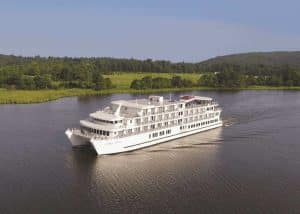
Civil War: Southeast Coast Cruise
Sail into Civil War history on our new Civil War: Southeast Coast Cruise, a unique journey that combines the luxury and ease of traveling aboard a cruise ship with the in-depth historical focus of a tour by Stephen Ambrose. As you sail from Charleston, South Carolina, to Jacksonville, Florida, you will delve into the Union’s... Read More >