Guests on our special 80th Anniversary of VE Day Tour will have an opportunity to travel back in time on a special guided tour of sites significant to Nazi Germany.
Among the highlights will be the top-secret Maybach Bunkers, the underground Zeppelin communication bunker, Tempelhof Airport, Reich Sports Field (site of the Berlin 1936 Olympic Games), and Seelow Heights.
Maybach Bunkers at Zossen
These photos show some of the above ground remains of the Maybach I German high command complex just outside of Berlin. Built between 1938 and 1940, the twelve bunkers of the complex were used to house the various departments of the Oberkommando des Heeres (OKH)-Army High Command. In some ways the complex could be considered the “German Pentagon.”

Disguised to look like ordinary houses, it was from the Maybach bunkers that the leaders of the German army planned some of the most critical campaigns of the war. The bunkers sit above the underground Zeppelin communication bunker, which descends two stories underground. Communications equipment securely placed underground allowed German generals to communicate with Wehrmacht forces around the world.

Also located in this area are rare surviving examples of the special air-raid shelters used by military personnel stationed at the German high command complex and the training areas where General Heinz Guderian, and others, developed the Blitzkrieg tactics used so effectively early in the war.
So well built were the bunkers in the complex, that after the war the Red Army took the complex over to house their own command centre.
Tempelhof Airport
Templehofer Feld was built in the early 1900’s and was used to test early aviation methods by Orville Wright and Zeppelin airships.
Between 1936 and 1939, architect Ernst Sagebiel designed what would become the largest airport in Europe on the Templehofer Feld. The airport demonstrates the Nazis’ technique of using modern construction methods combined with an exaggerated monumental architectural design to construct buildings meant to make the individual feel small and the Third Reich stupendous.
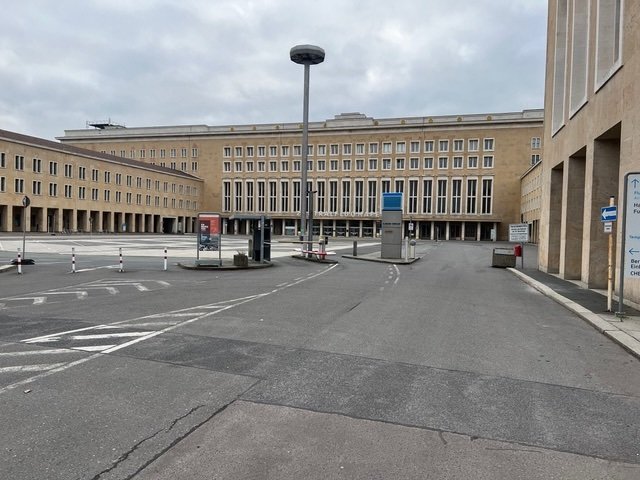
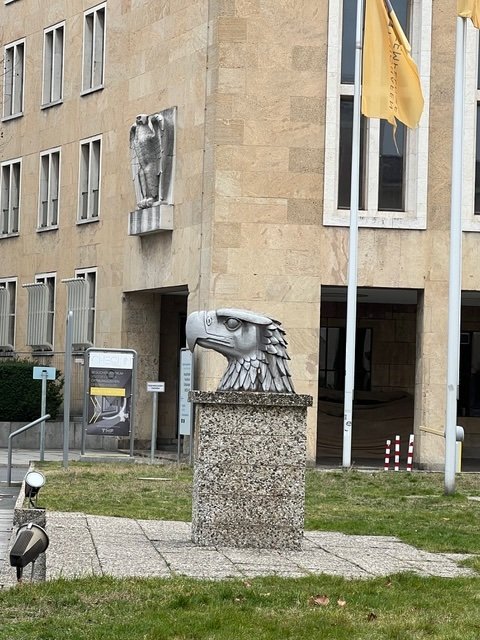
The reception building is characterized by an ornate façade with 21 entrance doors, reliefs, and sculptures such as the giant aluminum eagle, whose head still stands in front of the building to this day. Although not all work on the airport was completed by WWII, enough work had been done that it was used as an airport and a manufacturing and production site for aircrafts.
Tempelhof is in West Berlin so after the war it was controlled by the Americans. This is also one of the three airports used during the famous Berlin airlift that lasted 15 months between 1948 and 1949. The Soviets set up a blockade and did not allow the Western powers (French, British, Americans) to access West Berlin by road. Therefore, the only way to get supplies into West Berlin was via an airlift. This is considered a heroic effort and great example of international cooperation to supply the citizens of West Berlin with coal, food, and other essential goods.
Today, Tempelhof Airport is the site of many illegal and legal raves and fashion shows.
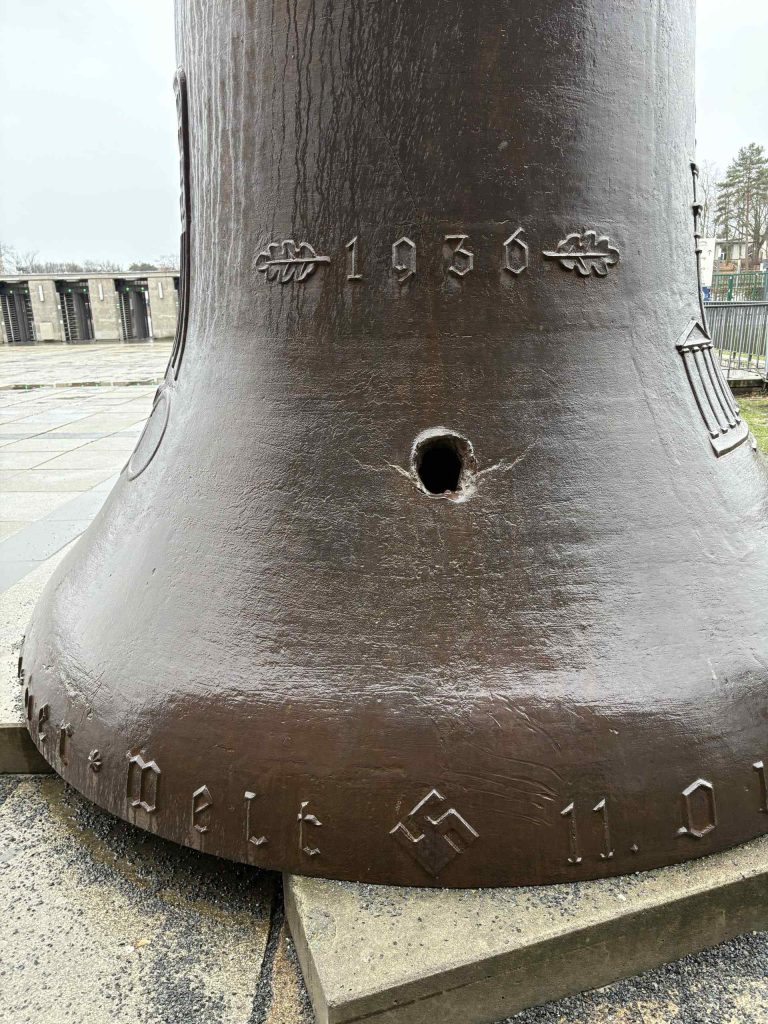
Olympic Bell for the Berlin Games
The Berlin 1936 Olympic Games took place August 1-16, 1936, just two years after Adolf Hitler became Führer. The games were used to promote Nazi propaganda and ideology.

The four stadiums at the Reich Sports Field were draped in Nazi banners and symbols. Pamplets and speeches espousing the natural superiority of the Aryan race were commonplace. Jesse Owens, a black American, won four gold medals in track and field, He was the most successful athlete at the Games and, as a black American man, the most of any athlete at the games, and was credited by ESPN with “single-handedly crushing Hitler’s myth of Aryan supremacy”
Seelow Heights
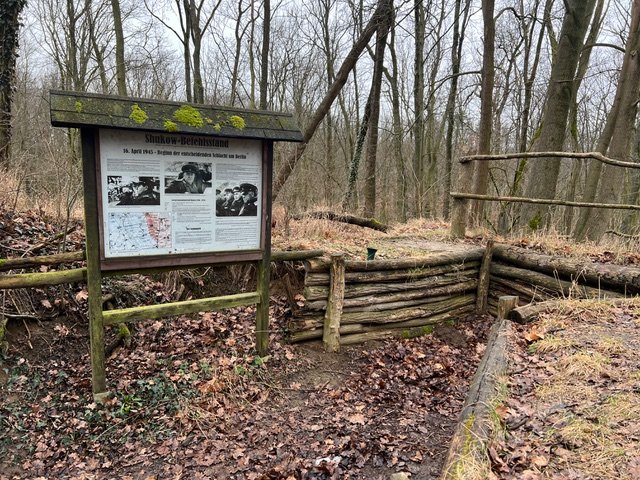
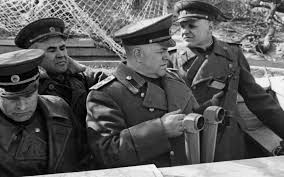 On the morning of April 16, 1945, Berliners heard artillery fire in the east. It was the start of one of the largest bombardments of World War II. For two uninterrupted hours that morning, the nearly 20,000 artillery pieces of Marshal Georgy Zhukov’s 1st Belorussian Front hammered German defensive positions. It was the thunderous announcement of the beginning of the Battle of the Seelow Heights, the last great defensive barrier east of Berlin.
Seelow will be spent looking at the On the 80th Anniversary of VE Day Tour we will visit the battlefield and the many preserved trenches, bunkers and tank trenches that the 8th Guard Army’s men sheltered in before the attack, including the remains of Marshal Georgy Zhukov’s personal command bunker.